
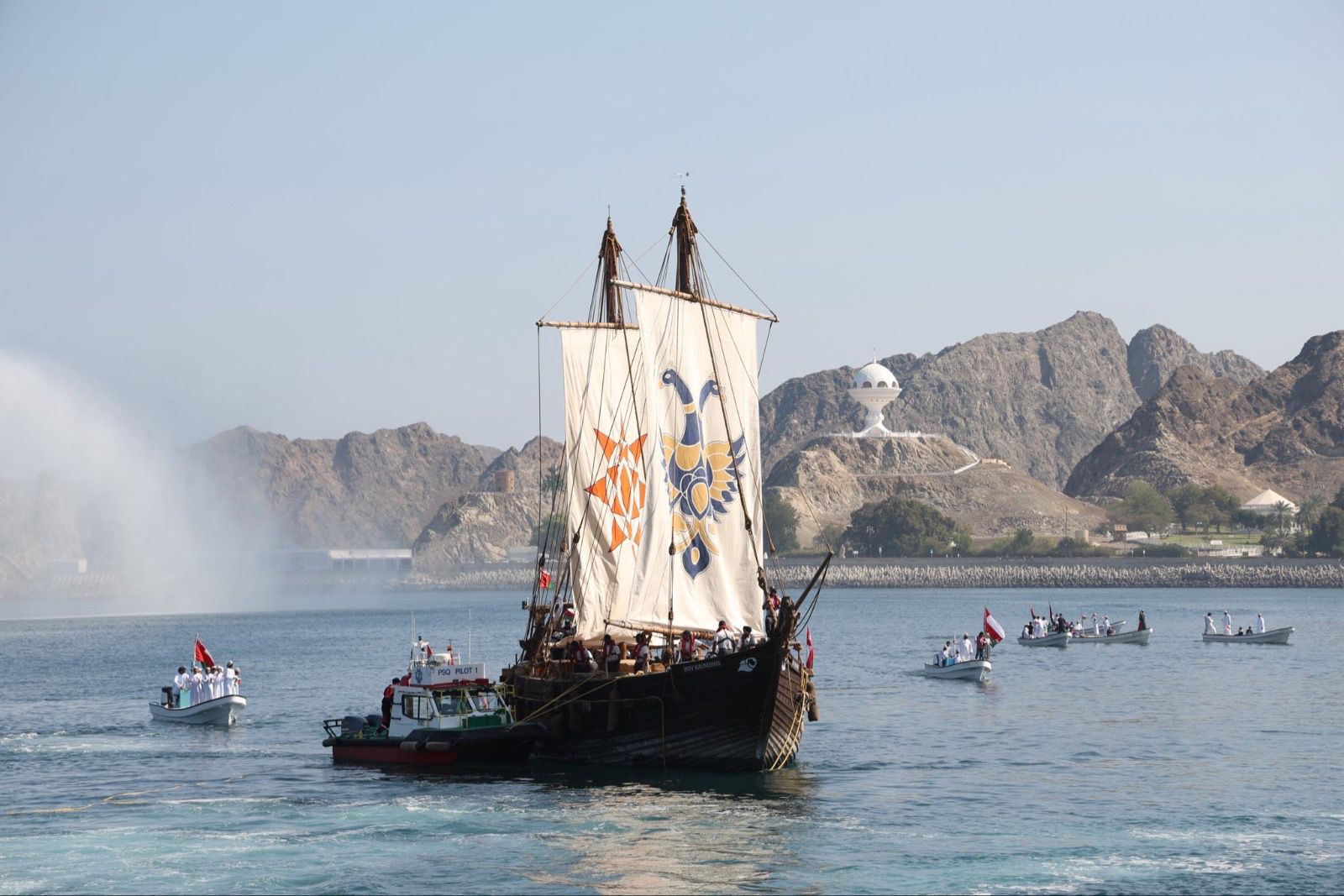
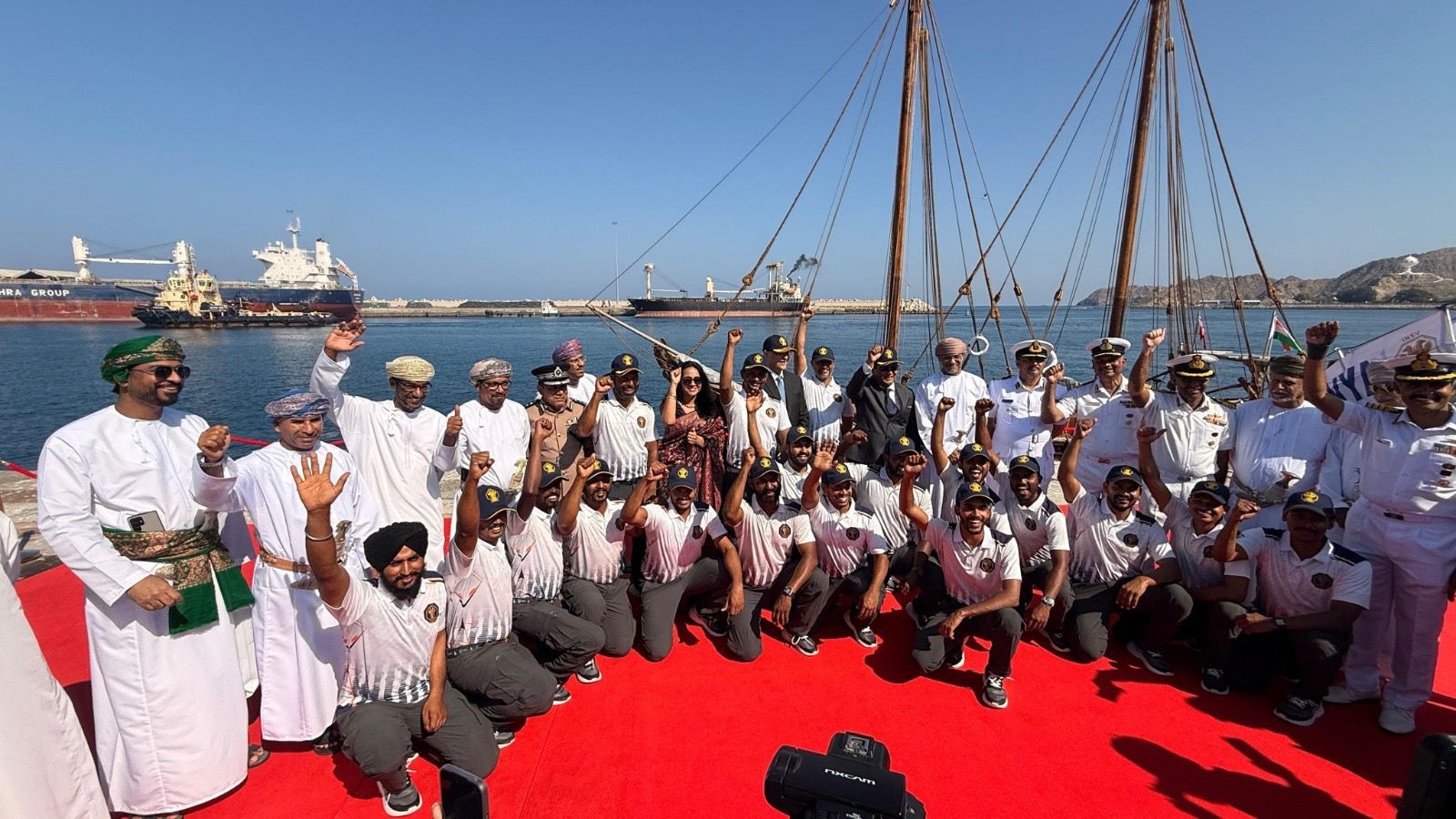
 Mumbai, 15th January 2026 ( TGN )– The Indian Navy’s traditionally built sailing vessel INSV Kaundinya reached Muscat, Oman, on 14th January after completing a challenging 17-day voyage. The indigenous vessel, constructed using ancient shipbuilding techniques, had set sail from Porbandar in Gujarat on 29th December 2025. The journey marks an important step in strengthening India’s maritime diplomacy and preserving its cultural heritage.
On the occasion, India’s Ministry of External Affairs expressed happiness, stating that the vessel is a symbol of Prime Minister Narendra Modi’s vision, showcasing India’s indigenous maritime knowledge, craftsmanship, and sustainable practices.
MEA spokesperson Randhir Jaiswal wrote on social media platform X, “A Voyage Across Time : Seas That Connect, Histories That Endure. Indian Naval Sailing Vessel (INSV) Kaundinya successfully completed its maiden voyage from Porbandar and arrived in Muscat today. Envisioned by PM Narendra Modi, this traditionally built stitched sail vessel stands as a powerful symbol of 5000 years of maritime, cultural and civilisational ties between India and Oman. It was warmly received by Minister of Ports, Shipping, and Waterways, Shri Sarbananda Sonowal and dignitaries from Oman.”
Kaundinya is inspired by a 5th-century ship depicted in the murals of the Ajanta Caves. It has been built without the use of modern nails or metal fasteners; instead, wooden planks are stitched together using ropes and cords. The vessel is named after the legendary ancient Indian mariner Kaundinya and reflects India’s indigenous maritime knowledge, craftsmanship, and sustainable traditions.
According to media reports, the ship has no cabins for rest. All crew members slept in sleeping bags during the voyage. The vessel has neither an engine nor GPS. It is equipped with square cotton sails and paddles and relies entirely on wind power. There is no electricity on board either. To alert other vessels, the crew used only headlamps worn on their heads. Sixteen crew members spent over two weeks on the ship, surviving on dry rations, khichdi, and pickles.