 Yoga Diplomacy: India’s Cultural ‘Soft Power’ Wins Hearts Across the World
22nd June, Mumbai, ( TGN ) – When Prime Minister Narendra Modi proposed the idea of an “International Day of Yoga” before the United Nations General Assembly (UNGA) in 2014, few could have imagined that the resolution would be adopted within just 90 days with the support of a record 177 countries. The United Nations’ declaration of 21 June as the International Day of Yoga on 11 December 2014 was not merely a diplomatic victory for India; it marked the beginning of one of the largest global expansions of India’s cultural “soft power” in modern history.
The journey of the past 12 years bears witness to the fact that yoga is no longer confined to the practice of a few ascetics or fitness studios. It has evolved into a shared cultural language for the world. While India’s Ministry of AYUSH has worked to make yoga an integral part of everyday life across the country, the Ministry of External Affairs and Indian missions worldwide, embassies and high commissions have transformed it into a remarkably effective instrument of global diplomacy.
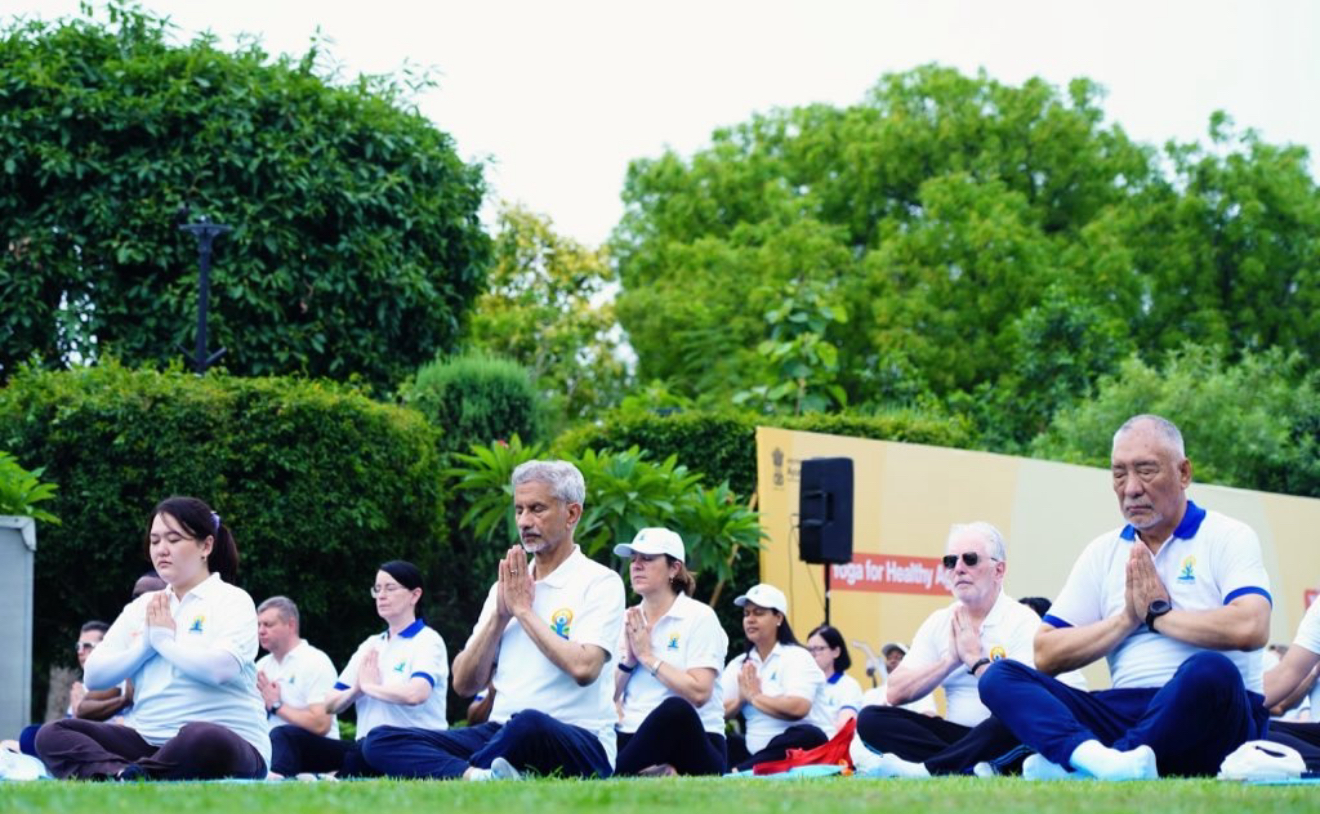
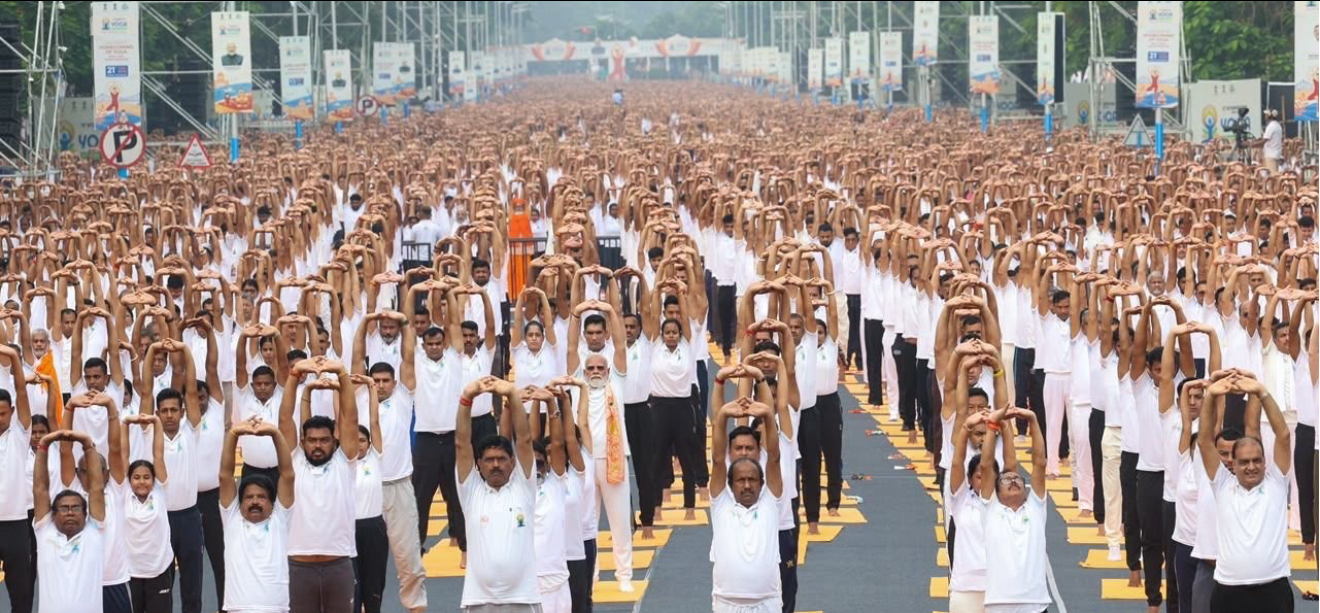
Thanks to the active efforts of Indian missions abroad, thousands of foreign citizens can now be seen every year practicing the “Common Yoga Protocol” in unison beneath the Eiffel Tower in Paris, at the bustling Times Square in New York, on the Great Wall of China, and in Argentina’s Olympic Park. India’s Permanent Mission to the United Nations regularly brings together global leaders and senior diplomats on a common platform to promote the message of peace and harmony through yoga. This serves as a practical demonstration of India’s philosophy of “Vasudhaiva Kutumbakam” (“The World Is One Family”), a vision that is increasingly being embraced by the international community.
Over these 12 years, the efforts of the Government of India and its diplomatic missions have not been limited to celebrations on 21 June alone. Through the Indian Council for Cultural Relations (ICCR), Indian missions have launched year-round yoga training programmes across the globe. Yoga chairs and academic centres have been established at foreign universities, providing this ancient discipline with greater scientific and academic legitimacy. The translation of yoga guidelines into the six official languages of the United Nations has further enabled yoga to become a part of workplaces and public health policies around the world.
In essence, over the past 12 years, India has transformed this ancient heritage into the world’s largest movement for global wellness. At a time when societies across the globe are grappling with mental stress and lifestyle-related illnesses, the far-sighted efforts of Indian missions worldwide and India’s “yoga diplomacy” have transcended national borders. It is an undeniable reality that through this ancient tradition, India’s cultural “soft power” has not only provided a new direction for global well-being but has also won the hearts of people across the world.