 Second edition of Ease of Doing Redevelopment creates a platform for direct interaction, expert guidance and greater awareness around redevelopment
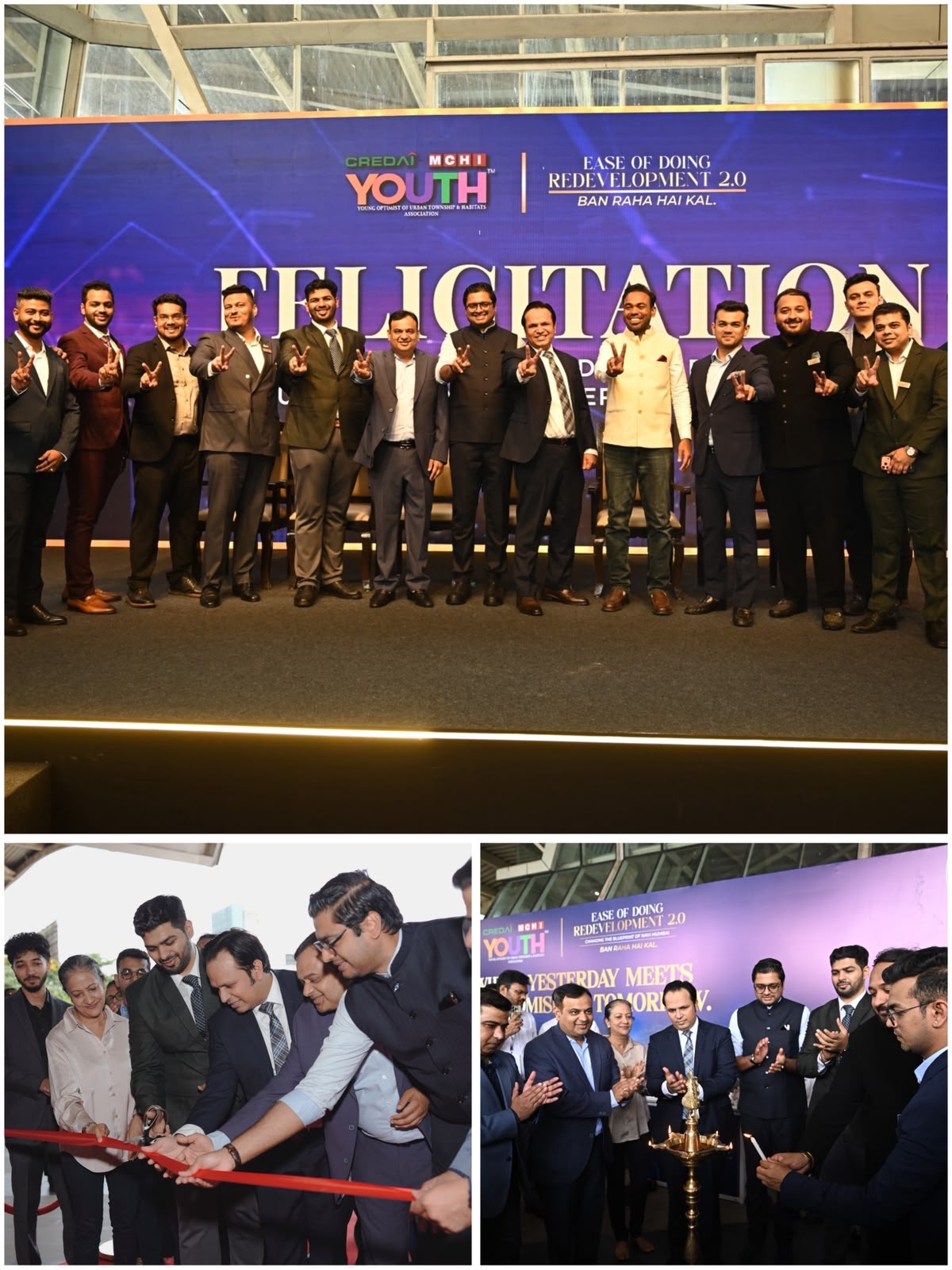
Navi Mumbai, September 27, 2026 ( TGN ) : CREDAI MCHI YOUTH NMR successfully hosted the second edition of Ease of Doing Redevelopment (EODR) 2.0 at Hall A, CIDCO Exhibition Centre, Vashi, Navi Mumbai, bringing together 35+ developers, 1,567 housing societies and 2,400+ visitors from across Navi Mumbai and the wider Navi Mumbai & Raigad (NMR) region.
The one-day exhibition focused on creating a direct platform for housing societies to interact with developers, industry professionals and experts and gain a better understanding of the redevelopment process. The initiative builds on the first edition, which saw participation from approximately 800–1,000 housing societies and led to conversations that eventually contributed to around 25 redevelopment projects being launched over the following year.
Redevelopment represents an important opportunity for housing societies and property owners to evaluate the future of their existing homes and communities. The exhibition featured panel discussions, expert consultations and direct developer-society interactions, covering aspects such as project feasibility, development models, commercial considerations and the technical, legal and financial dimensions of redevelopment. The platform also enabled developers to understand the specific requirements of individual housing societies, recognising that redevelopment cannot follow a one-size-fits-all approach.
Mr. Sumit Ahluwalia, President, CREDAI MCHI YOUTH NMR, said: “EODR 2.0 is about bringing greater awareness and transparency to the redevelopment process. As Navi Mumbai and Raigad continue to evolve, redevelopment presents an opportunity to renew ageing housing communities and create better living environments. Our objective is to give society members access to the right information and expertise so that they can understand the possibilities, evaluate the challenges and take informed decisions. We believe education has to be the starting point of redevelopment, and EODR is an effort to create that foundation through dialogue and collaboration.”
Mr. Vicky Thomas, Vice President, CREDAI MCHI YOUTH NMR, said: “Every housing society has its own circumstances, and redevelopment cannot be approached through a standard template. The building profile, land potential, financial considerations and expectations of residents all need to be understood before a proposal takes shape. EODR 2.0 brings together the technical, financial, legal and development expertise required to help societies understand these aspects. The aim is to make the redevelopment process easier to navigate by helping communities understand what they can expect and what they should evaluate.”
Mr. Jitesh Agrawal, Immediate Past President, CREDAI MCHI YOUTH NMR, said: “Last year, we hosted EODR 1.0, and the response encouraged us to build a larger platform this year. EODR 2.0 gives housing societies an opportunity to meet leading developers in Navi Mumbai and interact with them one-on-one, something that can otherwise be difficult to facilitate. The platform also brings experts and industry professionals into these conversations, helping societies understand the process and the practical steps involved in taking a redevelopment proposal forward. The growth from the first edition reflects the need for such a platform in the region.”
Mr. Akash More, President Elect, CREDAI MCHI YOUTH NMR, said: “The role of the Youth Wing is to create an open platform where meaningful redevelopment conversations can take place. We encourage society representatives to use EODR to ask difficult questions, understand technical capabilities and compare financial terms before taking the next step. At the same time, participating developers have an opportunity to demonstrate their capabilities, build trust and establish long-term relationships with communities. The future of Navi Mumbai will be shaped through collective participation, and initiatives like EODR can help bring the different parts of the ecosystem onto one platform.”
Mr. Amit Haware, Advisor, CREDAI MCHI YOUTH NMR, said: “Redevelopment is not simply about replacing an old building with a new one; it is about creating a better future for the community that owns and lives in that property. Society members need to look beyond the area being offered and evaluate a developer’s credibility, track record and ability to handle challenges through the redevelopment journey. There is also a need to understand the development potential of the property, the economics involved and the options available before making a decision. Trust becomes particularly important in redevelopment because, unlike a conventional project, the entire community is part of the ownership and the process has to work for all its members.”
With participation from developers and housing societies across various nodes of Navi Mumbai and NMR, EODR 2.0 expanded the scale of the platform while continuing its focus on transparency, awareness and collaborative redevelopment. A key focus of EODR 2.0 was the need for housing societies to understand their redevelopment potential and project economics before taking a decision. This is particularly relevant for older societies, many of which were constructed 40–50 years ago under very different property values, development norms and infrastructure conditions
About CREDAI MCHI YOUTH NMR
CREDAI MCHI YOUTH NMR is a platform representing young real estate professionals and developers in the Navi Mumbai and Raigad region. The association works towards promoting professionalism, innovation, collaboration and the progressive development of the real estate sector.
Through initiatives such as EODR, CREDAI MCHI YOUTH NMR seeks to facilitate greater awareness and constructive dialogue between the development community and property owners, particularly on issues that have a long-term impact on the region’s housing and urban landscape.