Maharashtra Government Moves to Fast-Track AI Innovation City with Tata Group
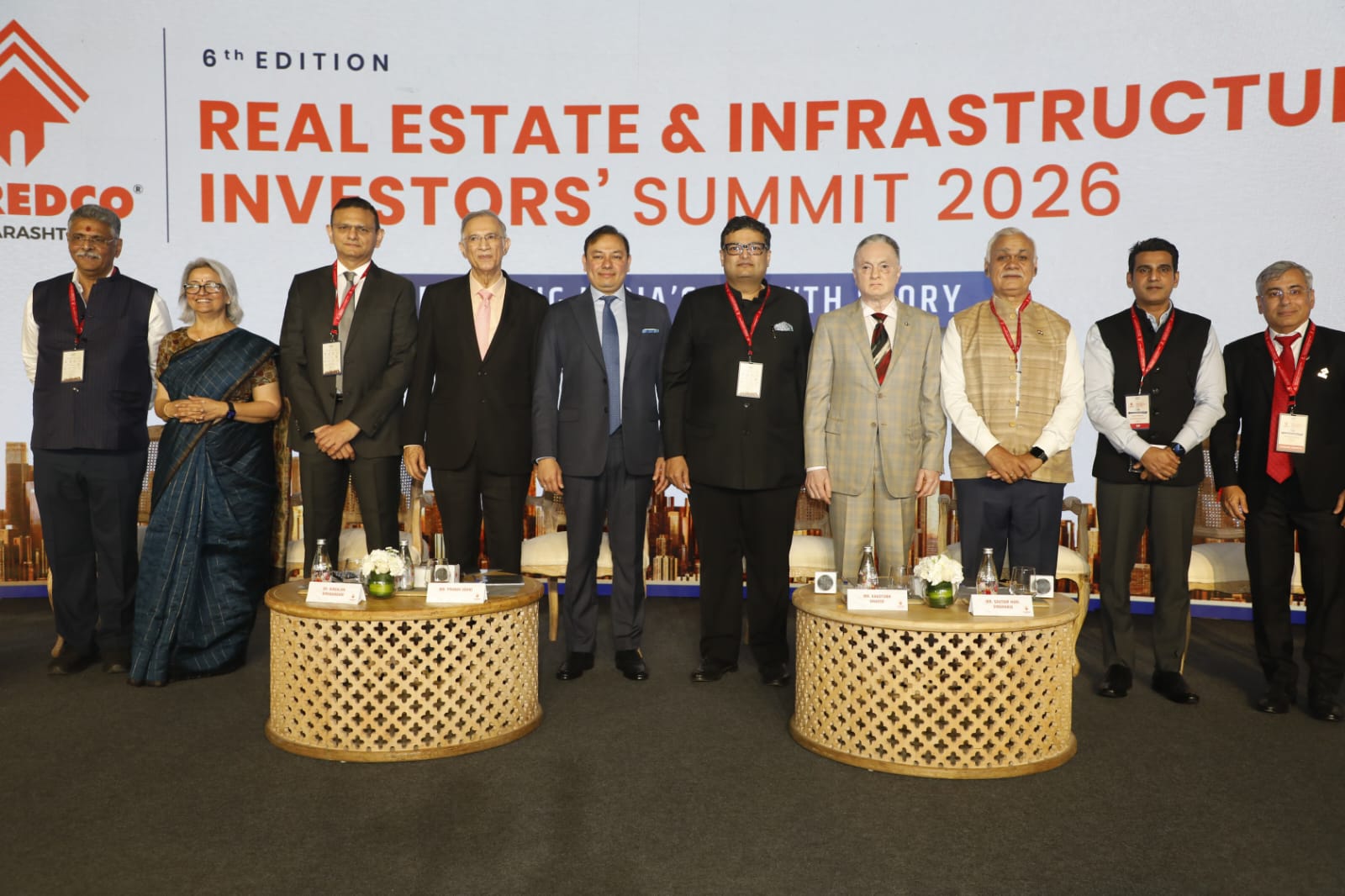
Mumbai, September 3, 2026 ( TGN ) : The Maharashtra Government is firming up a time-bound roadmap to expedite the development of the Innovation City near Navi Mumbai International Airport, being developed in partnership with the Tata Group; Shri Kaustubh Dhavse, Chief Advisor (Investments & Strategy) to the Chief Minister of Maharashtra, said during the 6th ‘Real Estate & Infrastructure Investors’ Summit (REIIS) 2026′ organized by NAREDCO Maharashtra at Jio Convention Centre in Mumbai today that brought the real estate developers, financiers, investors and bankers together.
The Maharashtra Government and the Tata Group had announced a landmark $ 11 billion investment to build India’s first Innovation City to be spread across 300 acres near the Navi Mumbai International Airport. According to Dhavse, the project of AI Innovation City envisaged development of large-scale AI data centres, alongside high-performance computing, semiconductors and Global Capability Centers (GCCs).
“The infrastructure that Maharashtra has created gives us an opportunity to take Mumbai, Maharashtra and India to the next level. We now have the momentum; the task is to execute at scale, create the right environment”, said Dhavse.
Dhavse highlighted that Mumbai’s transformation under Chief Minister Devendra Fadnavis’s vision is creating the infrastructure platform for the next phase of growth.
He also highlighted that data centres will be a critical pillar of this transformation. Maharashtra currently accounts for about 66% of India’s data-centre capacity, strengthening its position as a national digital-infrastructure hub, Dhavse informed.
The emerging ecosystem will also be supported by new universities, healthcare infrastructure and knowledge institutions, creating the talent base required for AI, technology and advanced industries. The Government’s broader AI agenda includes six Centres of Excellence and AI Innovation Regions across Maharashtra, he added.
Dhavse further underlined the importance of a strong ecosystem where policy, execution and capital will work together. He said, “With Maharashtra emerging as a key driver of India’s growth, predictable policies, credible execution and infrastructure-led development will be crucial to translating investment interest into tangible economic outcomes”.
Pranav Adani, Director, Adani Enterprises, highlighted the scale of opportunity arising from India’s infrastructure and urbanisation story, stressing the need to create an ecosystem capable of supporting the country’s next phase of growth. The convergence of infrastructure and real estate, he said, would be critical to creating new economic centres and unlocking the potential of emerging urban corridors.
Gautam Singhania, Chairman, Raymond Realty, said, “India’s real estate sector is at the epicentre of the nation’s transformation towards a $10 trillion-plus economy by 2047. With the sector already contributing over 7% to GDP, infrastructure-led growth is reshaping Mumbai and the MMR, creating new economic and residential growth centres.” Singhania called for deeper institutional capital, easier financing for upfront development costs, a dedicated framework for rental housing, GST rationalization and faster urban redevelopment.
Dr. Niranjan Hiranandani, Chairman, NAREDCO India said, “The real estate sector was entering a period of significant transformation, driven by infrastructure expansion, urbanisation and the emergence of new growth centres. Mumbai 3.0 is a major opportunity to reshape the metropolitan region, with improved connectivity opening up new possibilities across residential, commercial, logistics and emerging asset classes such as data centres.”
He added, “REIIS 2026 provides a platform to rethink investment strategies, harness AI and build resilient structures that can support India’s journey towards a multi-trillion-dollar economy,” Hiranandani said.
Kamlesh Thakur, President, NAREDCO Maharashtra said Mumbai’s redevelopment must be viewed as a long-term transformation rather than a collection of individual projects. He emphasized that redevelopment should create complete and liveable communities supported by adequate physical and social infrastructure. “India’s $30 trillion economic ambition by 2047 requires Maharashtra to be a leading partner in that journey. As the real estate industry, our goal must be to contribute to that vision through infrastructure creation and digital transformation,” Thakur said.
REIIS 2026 focused on alternative capital, cross-border investment, urban redevelopment, real estate liquidity, infrastructure finance, AI and PropTech. The overarching message from REIIS 2026 was that India’s next growth cycle cannot be driven by construction alone. As Mumbai enters a new phase of infrastructure-led growth and systematic redevelopment, stakeholders called for coordinated investment, long-term finance, policy stability, technology, skilled manpower and sustainable urban planning to create future-ready cities and support India’s 2047 economic ambitions.