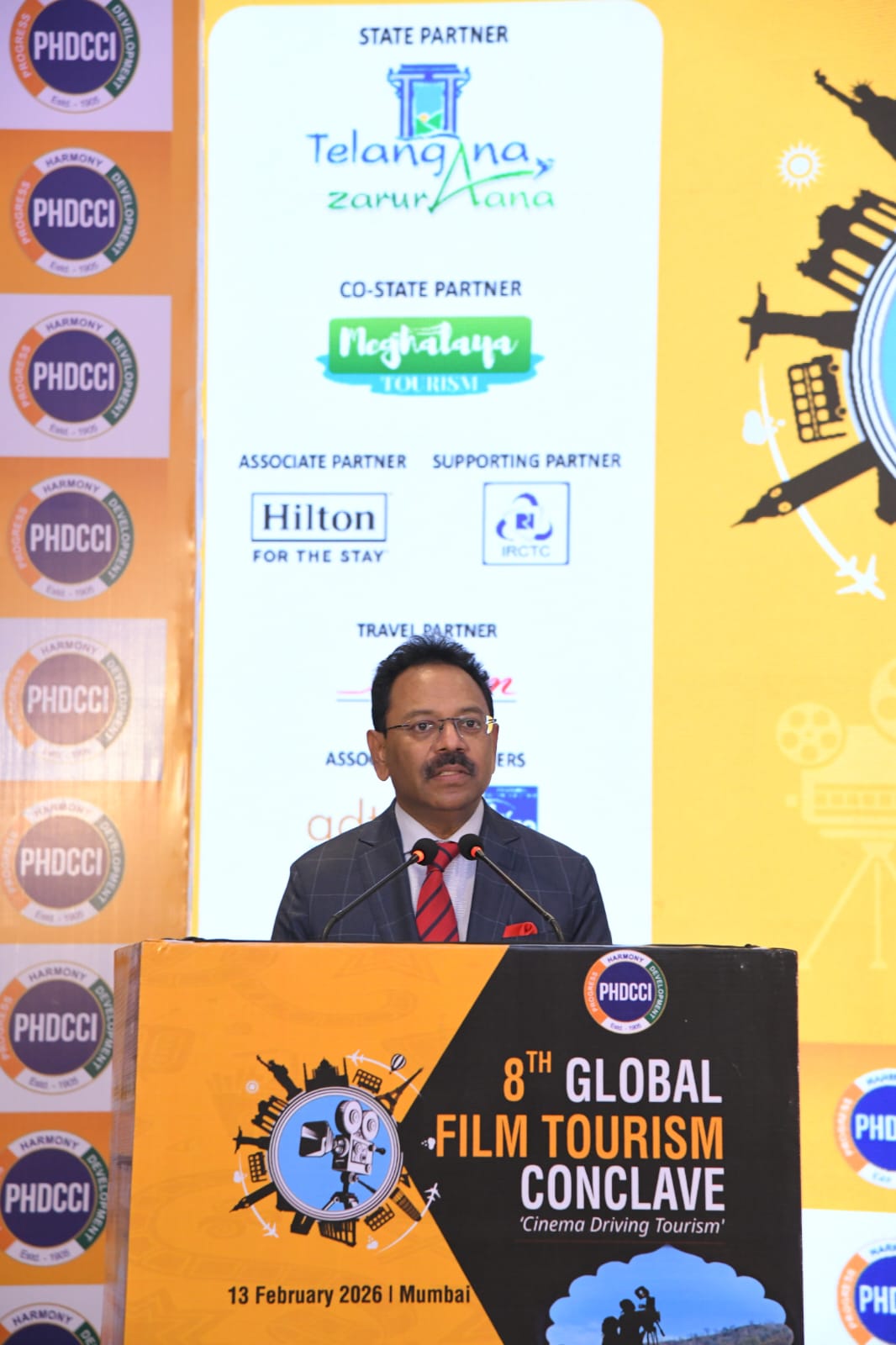
 PHDCCI’s 8th Global Film Tourism Conclave sets the agenda for converting cinematic storytelling into measurable tourism growth
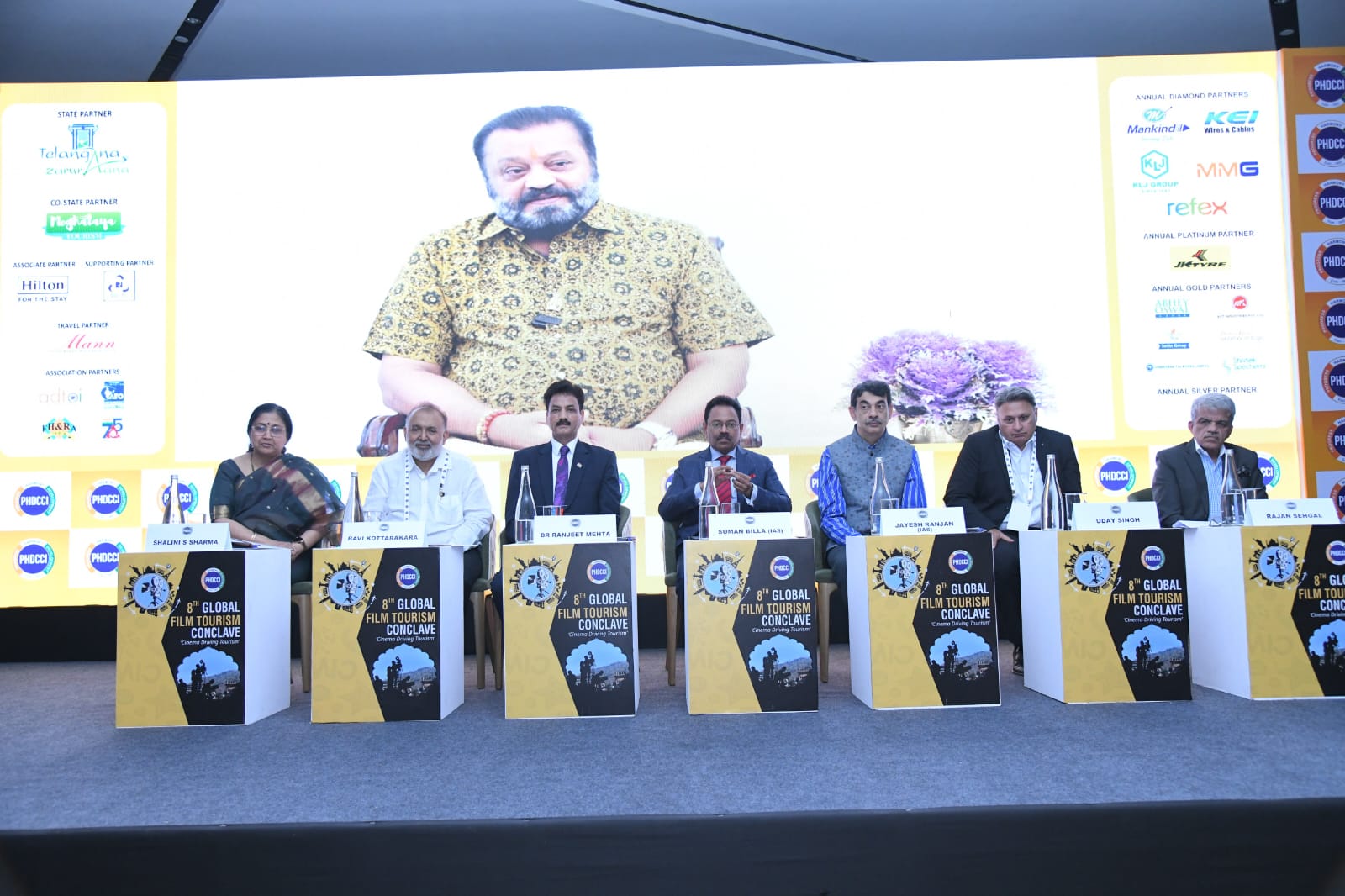
MUMBAI 13 th February 2026 ( TGN ) : “A location on screen does not remain just geography; it becomes aspiration. It becomes memory. It becomes a dream people wish to experience for themselves,” said Shri Suresh Gopi, Hon’ble Minister of State for Tourism, Government of India, while delivering a special video message during the 8th Global Film Tourism Conclave organized by the PHD Chamber of Commerce and Industry (PHDCCI) on 13 February 2026 in Mumbai.
Calling India ‘a civilization of stories’, he emphasized that from Varanasi’s spiritual aura to the festivals of the Northeast, from Rajasthan’s forts to Kerala’s backwaters, every region carries cinematic depth waiting to be shared with the world. He reaffirmed the Government’s commitment to positioning India as a film-friendly destination through progressive policy reforms and seamless facilitation mechanisms. “When the camera rolls, opportunity must flow to the grassroots,” he noted, highlighting film tourism as a driver of livelihoods, soft power and inclusive growth.
While delivering the Chief Guest address, said Mr. Suman Billa (IAS), Additional Secretary and Director General, Ministry of Tourism, Government of India, stressed that film tourism must be strategically designed rather than left to chance. Citing global research indicating that nearly 80 million travelers are influenced annually by cinema and media, he described film tourism as one of the most cost-efficient and high-impact destination marketing tools available today. “A compelling story unlocks aspiration far more effectively than conventional advertising.”
Mr. Billa further said, “Model guidelines, measurable incentive structures linked to screen time, data-driven evaluation, PPP models and immersive film-centric experiences are essential if we are to generate sustained economic value. With policy clarity, coordination between Centre and States and continuous revenue tracking, cinema can evolve from a cultural asset into a powerful economic engine for India.”
The Conclave, themed ‘Cinema Driving Tourism’, was supported by Telangana Tourism and Meghalaya Tourism. It brought together senior policymakers, leading producers, studio heads, content creators, hospitality leaders and tourism stakeholders to deliberate on how India can convert cinematic storytelling into measurable tourism and economic outcomes through structured policy intervention and industry collaboration.
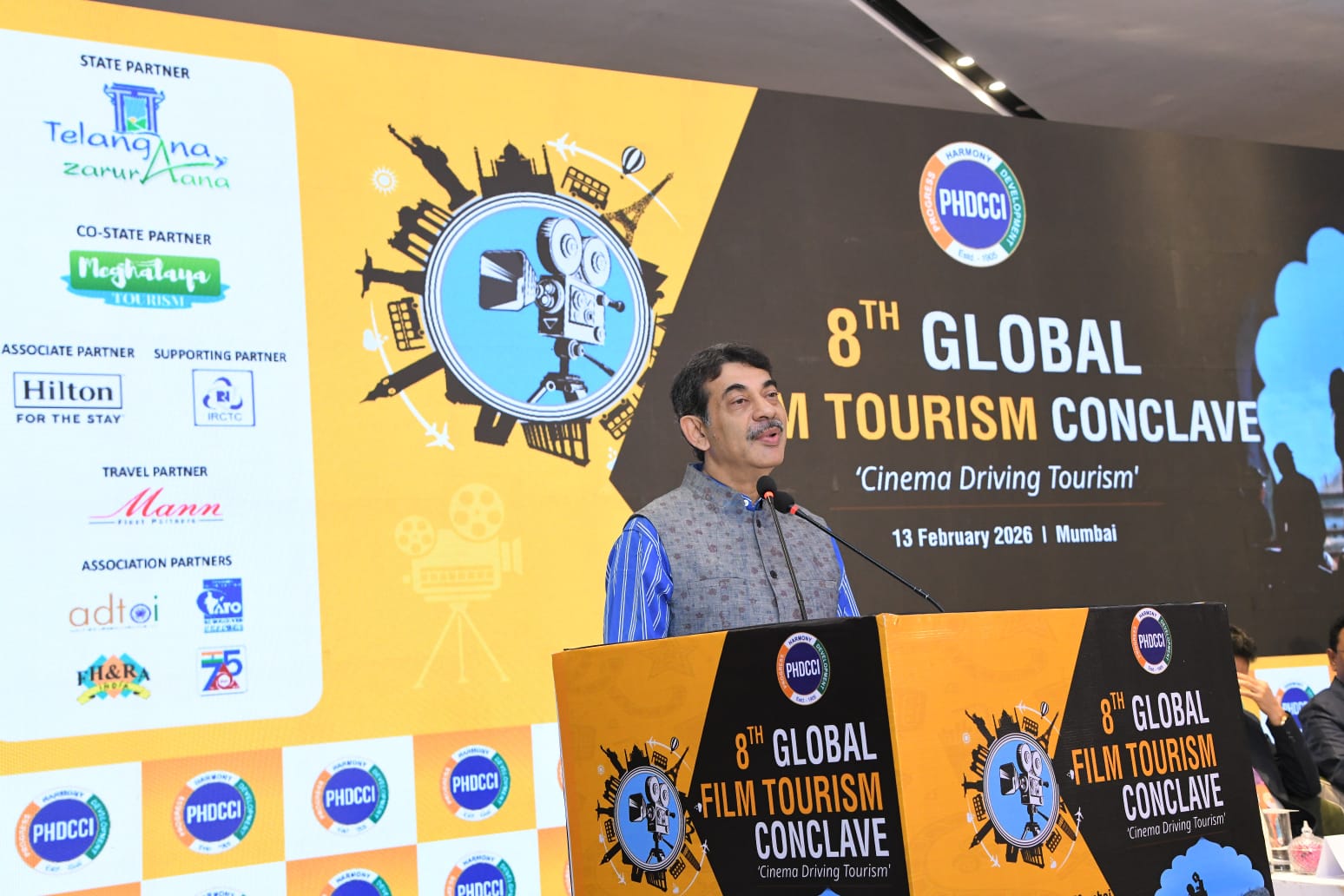
Mr. Jayesh Ranjan (IAS), Special Chief Secretary – Tourism, Government of Telangana, who graced the conclave as the Guest of Honour, outlined the three fundamental requirements for filmmakers: studios, locations and technology. He noted that Telangana, particularly Hyderabad offers an integrated ecosystem that includes advanced equipment and post-production facilities, in some cases surpassing those available in Mumbai. He highlighted that several of the highest-grossing recent films have been non-Hindi productions, with many Tamil films undertaking post-production work in Hyderabad, demonstrating the South’s growing dominance in the production value chain.
Speaking about the state’s digital facilitation efforts, he referred to the ‘Film in Telangana’ portal, designed to help filmmakers identify suitable studios, locations and post-production facilities while navigating approvals efficiently. “Filmmakers often struggle with bureaucratic processes. Our portal pre-identifies and streamlines approvals, making filming smoother and faster,” Mr. Ranjan said.
Dr. Ranjeet Mehta, CEO & Secretary General, PHDCCI, described cinema as India’s most underleveraged tourism campaign. Highlighting India’s position as one of the world’s largest film-producing nations, he stressed that each major production creates a ripple effect across hospitality, transport, logistics, design and local employment ecosystems. Drawing parallels with global film tourism success stories such as New Zealand and the United Kingdom, he called for a coordinated national framework, stronger alignment of incentives across states and systematic mapping of tourism footfall linked to major productions.
In his keynote address, Mr. Ravi Kottarakara, President, South Indian Film Chamber of Commerce, aligned the discussion with the Hon’ble Prime Minister’s vision of Make in India, stating that India must ‘shoot in India, explore India and show the world what India truly represents’. He emphasized that tourism extends beyond locations to encompass culture, cuisine, festivals, crafts, traditions and heritage that cinema can revive and amplify. Calling for greater exploration of the Seven Sisters and Assam, he observed that India possesses the unique capability to recreate landscapes comparable to any country in the world. He further proposed the creation of a comprehensive national filming guide mapping cities, hotels, travel agencies and production facilities across states, while stressing the need for single-window clearances to simplify filming processes and create a win-win for both tourism and the film industry.
Providing an international industry perspective, Mr. Uday Singh, Managing Director, Motion Picture Association (India), noted that locations function as economic levers, with the global screen industry supporting nearly 2.6 million jobs and emphasized that India is increasingly gaining recognition as both a production and post-production destination. Highlighting that over 120 international productions have already been attracted to India, he remarked that the country’s tourism economy can be significantly strengthened by leveraging film tourism strategically. He underscored that the sector’s growth depends on three critical pillars – efficiency, scale and incentives supported by predictable policies and seamless facilitation mechanisms.
Mr. Rajan Sehgal, Co-Chair – Tourism & Hospitality Committee, PHDCCI, said, “Film tourism is no longer a peripheral conversation; it is central to India’s destination branding strategy. This Conclave is a platform for actionable collaboration, where government frameworks and creative ambition converge to unlock sustainable economic value.”
The inaugural session was moderated by Ms. Shalini S Sharma, Assistant Secretary General, PHDCCI, who noted that in a world where screens have multiplied and content consumption is borderless, destinations are increasingly being discovered through OTT platforms and digital storytelling.
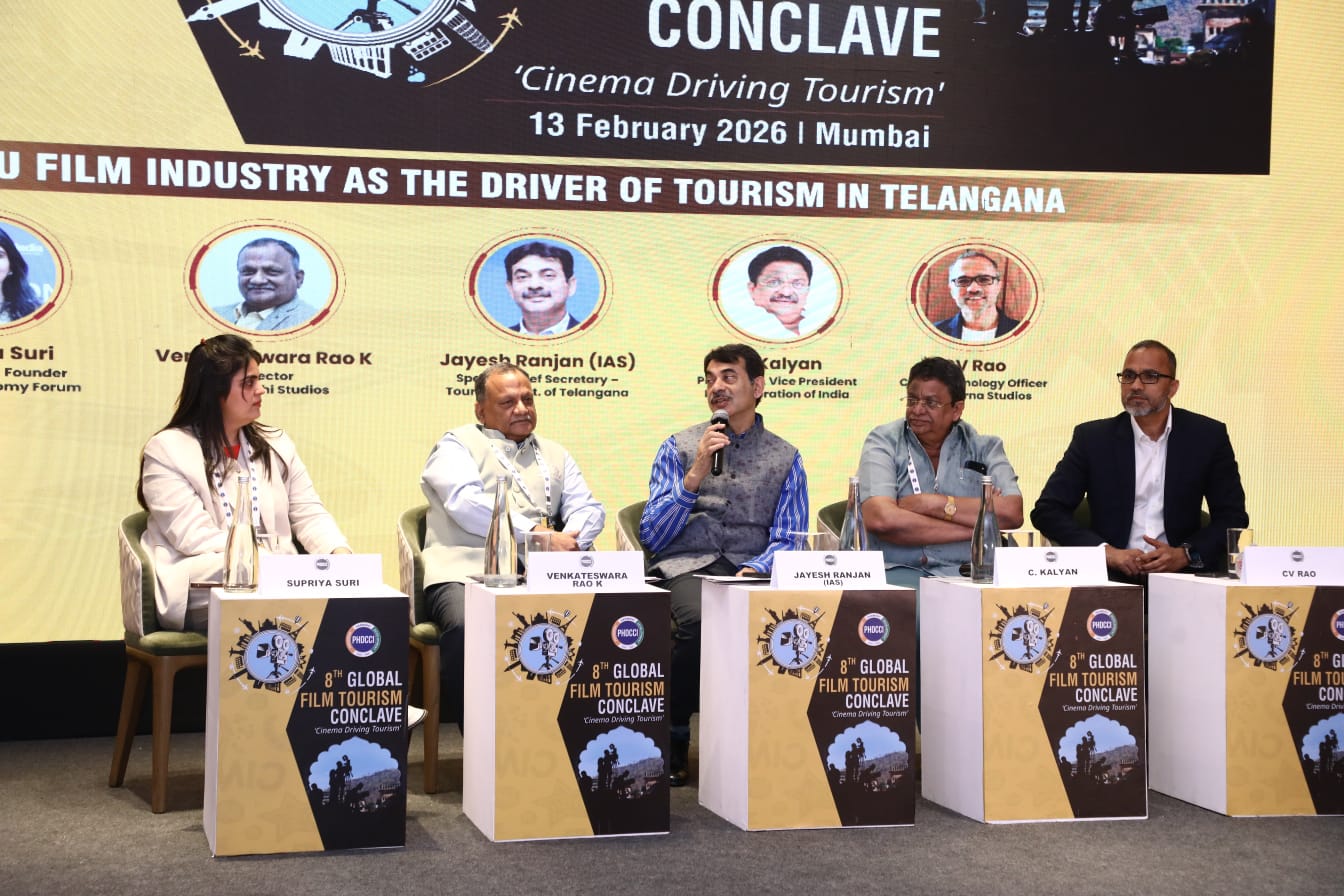
The thematic session, ‘Telugu Film Industry as the Driver of Tourism in Telangana’, moderated by Ms. Supriya Suri, Filmmaker & Founder, Creative Economy Forum, examined Telangana as a structured case study in film-tourism convergence. Panellists – Mr. Jayesh Ranjan (IAS); Mr. C. Kalyan, Producer & VP, Film Federation of India; Mr. Venkateswara Rao K, Director, Sri Sarathi Studios; and Mr. CV Rao, Chief Technology Officer, Annapurna Studios, noted that with Tollywood recording Rs. 2,300 crore in box office collections in 2022, the industry’s scale can be strategically leveraged to strengthen film tourism through policy support, infrastructure development and studio-led visitor experiences.
The session on ‘Content Explosion as the Driver of Tourism’, moderated by Ms. Shalini S Sharma, shifted focus to the transformative role of OTT platforms. Panellists – Mr. Aashish Singh, Producer, Red Chillies Entertainment; Ms. Sunitha Ram, Producer, La Sutra Pictures; Mr. Syed Ahmad Afzal, Writer & Director; Mr. Shivam Gupta, Producer & Founder, Shivam Gupta Casting; and Ms. Barnali Ray Shukla, Writer, Filmmaker & Poet, explored how hyper local narratives and authentic storytelling are mainstreaming smaller towns and remote regions. The discussion reinforced that in the era of digital content, every streaming frame has the potential to act as global destination marketing.
In the session titled ‘Promoting North East through the Camera’, moderated by Mr. Nitin Tej Ahuja, CEO, Producers Guild of India, the spotlight turned to India’s emerging cinematic frontier. Panellists including Ms. Phira P. Lyngdoh, Information & Publicity Officer – Tourism, Government of Meghalaya; Ms. Sulakhyana Baruah, Actor and Producer; Mr. Shiladitya Bora, Filmmaker & Founder, Platoon One Films; and Mr. Sunilkumar Panda, Resort Manager, Mayfair Tea Resort Siliguri discussed how policy incentives, improved connectivity and logistical facilitation are positioning the North East as a compelling narrative canvas. The region’s portrayal in recent films and web series is gradually reshaping mainstream tourism perception and expanding travel interest beyond conventional circuits.
The conclave culminated in a powerful valedictory conversation titled ‘Stories that Make People Travel’, hosted by Mr. Prashant Shishodia, Consulting Senior Editor – Entertainment, NDTV. Mr. Rahul Mittra, Filmmaker and Actor; Mr. Vipin Sharma, Actor; and Mr. Umesh Shukla, Writer and Director, reflected on how locations influence storytelling, performance and audience imagination. They highlighted that audiences often travel not merely to see a destination, but to emotionally reconnect with cinematic moments experienced on screen. The session underscored that authentic storytelling remains the most organic and sustainable driver of tourism. The three distinguished guests were felicitated by PHDCCI for their contribution towards promoting film tourism through impactful storytelling.
The conclave was also supported by Hilton, IRCTC, Mann Fleet Partners, ADTOI, FHRAI, IATO and TAAI, reinforcing the strong industry-wide backing for positioning India as a premier global filming and film-tourism destination.