
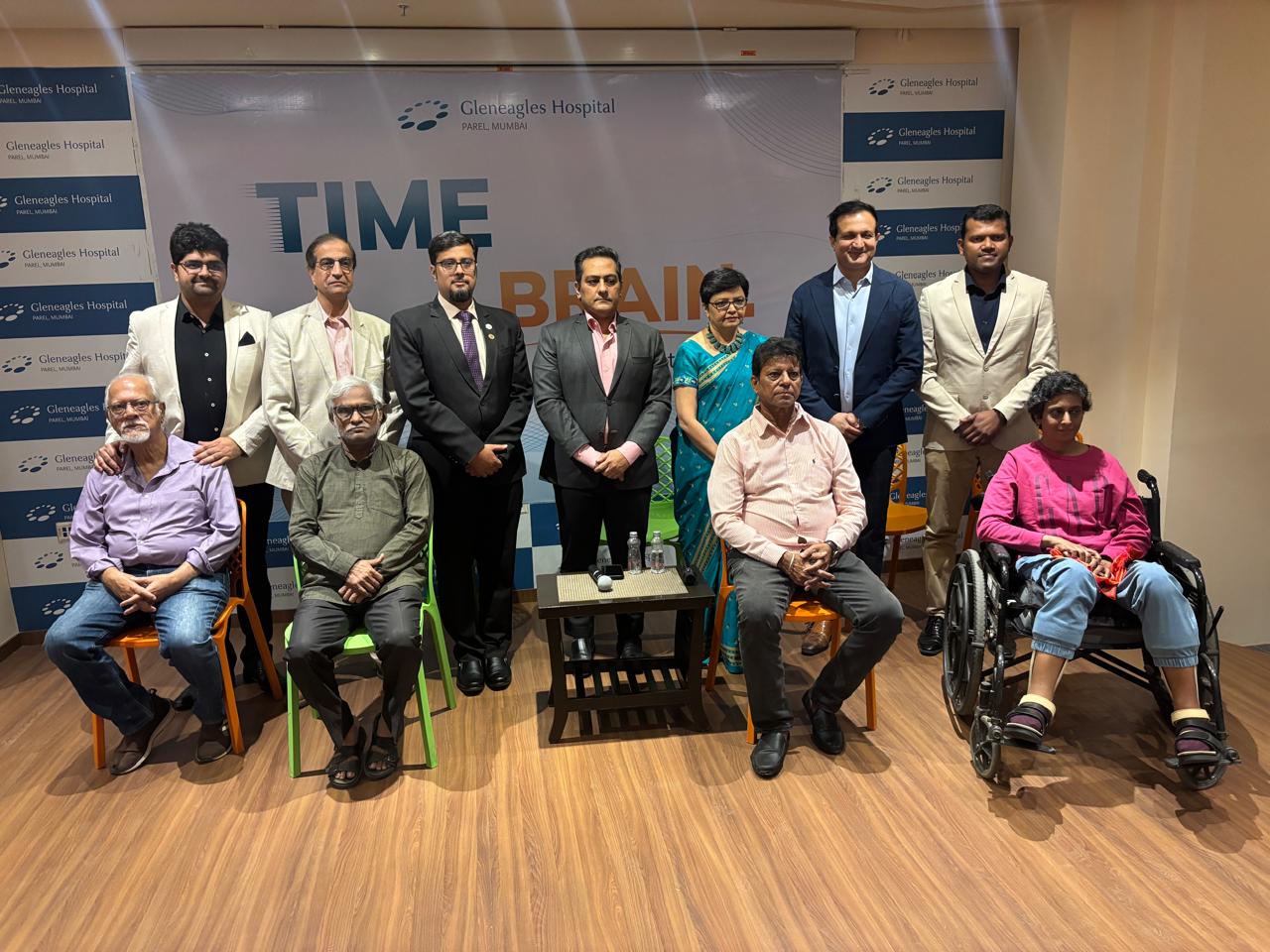
On the occasion of World Stroke Day, Gleneagles Hospital Parel stress on Stroke and the importance of timely assessment.
Less Than 5% of Stroke Patients in India Reach Hospitals Within the Treatment Window
One in four people will experience a stroke in their lifetime, with 15–20 million people affected worldwide every year
Stroke cases are rising among adults in their 20s and 30s; 75–85% are ischaemic and 15–20% haemorrhagic. Timely diagnosis, specialised stroke care and rehabilitation can help save lives and reduce long-term disability
Mumbai 28 th October 2026 ( TGN ): Stroke is a medical emergency in which every minute matters. Often associated with older adults, stroke can affect people across age groups, including those in their 20s and 30s. While heart attacks are a leading cause of death worldwide, stroke is another major health concern. On World Stroke Day, experts at Gleneagles Hospital, Parel, Mumbai, stress the importance of recognising symptoms, reaching a stroke-ready hospital promptly and receiving appropriate treatment within the critical window.
Stroke cases rising among younger adults
“Since COVID-19, we have observed a rise in stroke cases among younger adults. Earlier, stroke was more commonly seen in people in their 40s and 50s, but we are now seeing cases among those in their 20s and 30s. Stroke cases in the younger population appear to have increased by around 10–15%. High blood pressure, diabetes, smoking, alcohol consumption, unhealthy eating habits, lack of exercise, and stress contribute to the concern. In some women, oral contraceptive pills may also increase the risk, particularly when other risk factors are present. Ischaemic strokes, caused by blocked arteries, account for approximately 75–85% of cases, while haemorrhagic strokes, caused by bleeding in the brain, account for 15–20%,” said Dr Nitin Dange, Director – Interventional Neurologist and Neurosurgeon, Gleneagles Hospital, Parel, Mumbai.
“Timely diagnosis is crucial, as blood thinners can worsen bleeding in haemorrhagic strokes. Eligible patients with ischaemic stroke may receive clot-dissolving treatment within 4.5 hours, while selected patients may benefit from mechanical thrombectomy within 24 hours,” Dr Dange added.
Timely treatment can changeoutcomes
“In India, less than 5% of patients reach hospitals within the treatment window. In other countries, it is about 15–20%. One in four people will experience a stroke in their lifetime, and 15–20 million people worldwide have a stroke every year,” said Dr. Shirish M Hastak, Regional Director, Neurology, Stroke & Neurocritical Care, highlighting the need to improve timely access to stroke care.
Dr Shirish Hastak stressed the importance of monitoring blood pressure, describing high blood pressure as a silent killer that requires regular checks and appropriate management to reduce stroke risk.
Early intervention helps 46-year-old woman recover
On December 1, 2025, Ghatkopar-based 46-year-old corporate employee Tejal Bhatt, who had a history of high blood pressure, suddenly developed weakness and loss of sensation in her left hand at home. Her husband returned within 15–20 minutes of receiving her call and noticed that she could neither feel touch on her left hand nor raise it.
The family reached Gleneagles Hospital in approximately 45 minutes. The hospital activated its Code White stroke protocol, enabling a coordinated emergency response. After an MRI, Tejal was diagnosed with a left-brain stroke and received thrombolysis, a clot-dissolving injection. Her left hand and leg were saved. She was discharged after approximately 12 days and has since returned to normal life, with no signs of stroke-related disability.
“Activating the hospital’s emergency stroke protocol enabled timely treatment during the critical window. Recognising stroke symptoms, identifying when they began and reaching the hospital immediately can make a huge difference to recovery. Patients should never attempt to treat a suspected stroke at home. A structured rehabilitation programme can further improve functional recovery and quality of life” said Dr Pankaj Agarwal, Director of Neurology, Stroke and Neurocritical care.
“I am grateful to the doctors for saving my wife’s life. Seeing her recover and return to normal life means everything to our family,” said Tejal’s husband Adit.
Rapid response and rehabilitation are essential
“We have code systems in place at the hospital to ensure a swift, coordinated response during medical emergencies. Code White is activated for suspected stroke cases, bringing together the stroke team for rapid assessment and appropriate treatment. Advanced technology and coordinated efforts help reduce delays and improve patient outcomes,” said Dr Bipin Chevale, CEO, Gleneagles Hospital Mumbai.
BOX
Dr Dange urges people to remember BE FAST to recognise stroke symptoms:
B – Balance: Sudden loss of balance or coordination.
E – Eyes: Sudden loss of vision in one or both eyes.
F – Face: Drooping or asymmetry on one side of the face.
A – Arms: Sudden arm weakness or weakness on one side of the body.
S – Speech: Difficulty speaking, finding words, or expressing oneself.
T – Time: Call an ambulance immediately and reach the nearest stroke-ready centre.